
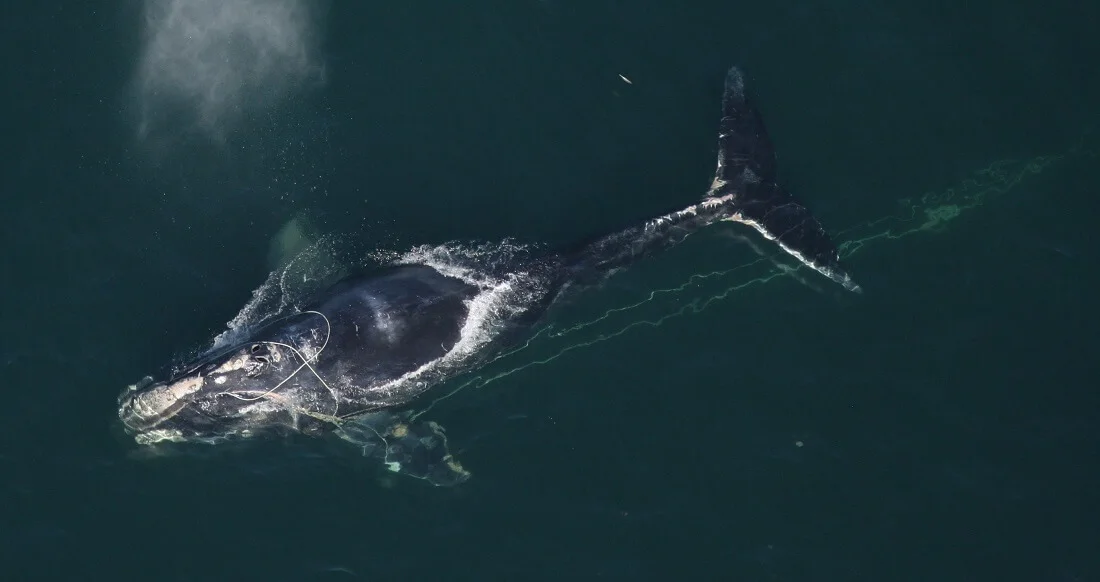
The number of North Atlantic right whales (lat. Eubalaena glacialis), one of the most endangered species of marine animals, has recently decreased again. According to a new annual report prepared by scientists, their population decreased by 2 percent to 382 individuals.
The report notes that in previous years the number of these whales increased slightly, but recently they have declined again. The main causes include warming seawater, whale entanglement in fishing gear and collisions with ships.
According to Heather Pettis, chair of the North Atlantic Right Whale Council, rising ocean temperatures are changing the habitats of small marine organisms that serve as the whales' main source of food. In search of food, whales follow these organisms and are forced to move to marine areas where an adequate level of protection is not provided. This increases the likelihood that they will face threats from human activities.
According to scientists, between 2010 and 2020, the number of North Atlantic right whales declined by 25 percent. Although more than 20 calves of the species were born last year, increased conservation efforts and threat prevention are still needed to ensure sustainable growth of the overall population.
Experts emphasize the importance of reducing the impact of fishing and shipping on the habitats of these marine animals, as well as strengthening monitoring of changes in the marine ecosystem.